
This year marks 80 years since the end of World War II in Japan. Many commemorative events and comments from so-called intellectuals have been heard, but among them, the words of Sen Soshitsu XV (Soshitsu Genshitsu) of the Urasenke school—who passed away on August 14 at the age of 102—were particularly memorable. Reflecting on the time when, as a student soldier, he served tea to friends departing on special attack missions, he said calmly, “Having survived, I have spent my life promoting peace through tea under the spirit of ‘Wa’—Harmony, Respect, Purity, and Tranquility.” His loss is deeply felt.
At a recent lecture, a judicial scrivener pointed out that “final-stage living” in the era of 100-year lifespans means deciding how to live the second half of life. He explained that from one’s forties and fifties onward, one should prepare for that second half with excitement and clear intention. In the traditional 80-year lifespan, the words of poet Fujiwara no Kiyosuke—“If I should live longer, even the times I once found painful may now seem dear to me”—resonate deeply. Yet as the late Shumon Miura wrote in his book Life Begins at Fifty, as long as we live, we must find purpose and live it fully.
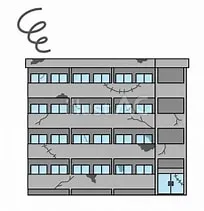
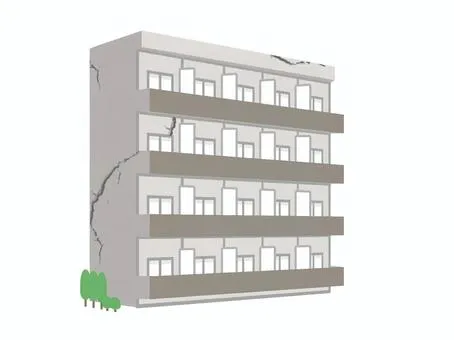
Meanwhile, the foundation of our daily lives—single-family homes and condominiums—has reached record-high prices in Tokyo’s 23 wards. Pencil houses and aging stock condominiums have surged, highlighting a growing issue of “housing deterioration.” The phrase “final-stage housing” is now being used to describe the emerging crisis of aging homes. More than four million condominiums in Japan are now over 40 years old. Many face serious challenges caused by the “three forms of deterioration”: physical, functional, and social. These issues have made the lifespan—and end-of-life planning—of condominiums an urgent concern.
To address this, we must consider three main points:
- Feasibility of reconstruction and volume checks
- Feasibility of renovation work
- Feasibility of financial planning
These form the basis of “final-stage condominium life” reviews. Some cases are being examined with the support of leading condominium developers such as the HK Group. In any case, it is clear that the “final-stage planning” of our lives and that of our housing—our living foundation—are closely intertwined.
In the field of real estate appraisal, the issue of “final-stage housing” will continue to be one that cannot be ignored.
Reprinted from Real Estate Management Journal Co., Ltd. “Weekly Real Estate Management” (with permission)

.webp)
.webp)


